Bangladesh’s history is visible in far more than its museums. Across the country are Mughal forts and mosques, the remains of Buddhist monastic centres, Hindu temples covered in terracotta decoration, old trading settlements and buildings associated with the colonial period and the Nawabs of Dhaka. Together, these places reflect the region’s long history as part of Bengal and its connections with wider South and Southeast Asia.
This guide highlights the most rewarding historical places to visit in Bangladesh, explains what makes each one worth seeing, and shows how to group sites into realistic routes. Two cultural properties in Bangladesh are on UNESCO’s World Heritage List: the Historic Mosque City of Bagerhat and the Ruins of the Buddhist Vihara at Paharpur. The Sundarbans is also a World Heritage property, but it is a natural site rather than a historical monument. Check the UNESCO World Heritage list for Bangladesh{target=“_blank” rel=“noopener noreferrer”} for the official designations.
If you are planning a multi-day heritage trip, compare accommodation locations before fixing your route. Staying near the first site of the day can save time where public transport connections are limited.
Best Historical Places to Visit in Bangladesh
1. Lalbagh Fort, Dhaka
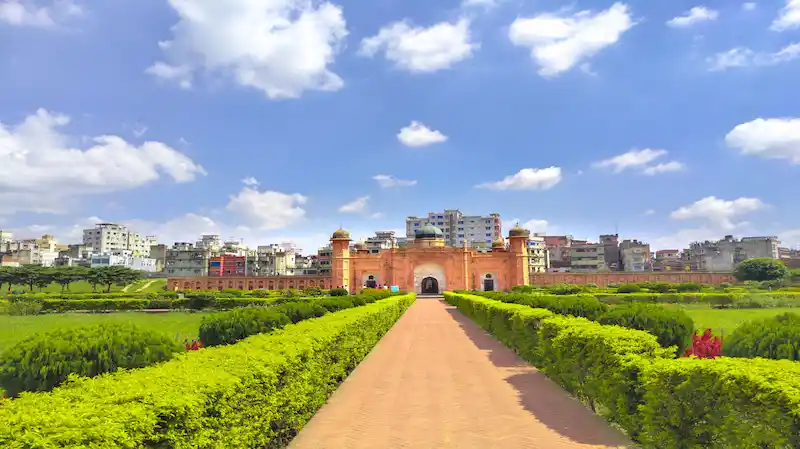
Lalbagh Fort is an unfinished Mughal fort complex in Old Dhaka, begun in the late seventeenth century during the Mughal period. Its surviving structures include the tomb associated with Pari Bibi, a mosque and the audience-hall and hammam building. Gardens and open courtyards connect the monuments, making the fort one of the most accessible places to start learning about Mughal-era Dhaka.
What to look for: The relationship between the tomb, mosque and audience-hall complex; the brickwork and architectural details; and the way the fort sits within the dense streets of Old Dhaka. It is not a fully completed military fortress, so approach it as a preserved historic complex rather than expecting an intact defensive citadel.
Planning tip: Combine Lalbagh Fort with one or two nearby Old Dhaka stops instead of trying to cross the city repeatedly. Check current opening hours, ticket arrangements and weekly closures before visiting through the Department of Archaeology{target=“_blank” rel=“noopener noreferrer”}.
For a broader city route, see our Dhaka Travel Guide.
2. Ahsan Manzil, Dhaka
Known for its pink exterior and prominent dome, Ahsan Manzil stands beside the Buriganga River in Old Dhaka. It was the palace of the Nawabs of Dhaka and is now a museum, with galleries that help visitors understand the family’s role in the city’s social and political life during the nineteenth and early twentieth centuries.
What to look for: The restored palace architecture, historic rooms, portraits, furniture and objects associated with the Nawab household. The museum visit works especially well when paired with a walk through nearby riverfront and trading districts, although these areas remain busy working parts of the city.
Planning tip: Ahsan Manzil has its own schedule and ticket arrangements, which may change around holidays. Check the official Ahsan Manzil Museum ticketing website{target=“_blank” rel=“noopener noreferrer”} before setting out. Do not assume its weekly closing day is the same as that of every other Dhaka attraction.
3. Panam Nagar and Historic Sonargaon, Narayanganj
Sonargaon was an important historic centre in Bengal, while Panam Nagar is known for its street of old merchant houses built during a later period of regional trade and commerce. The surviving buildings show a mixture of architectural influences and offer a different experience from the religious monuments and archaeological ruins found elsewhere in the country.
What to look for: The long street lined with historic buildings, architectural details on the facades and the contrast between the preserved structures and the modern settlement around them. The nearby Bangladesh Folk Arts and Crafts Foundation adds context about traditional crafts and cultural life; it is a separate attraction, so check its opening arrangements independently.
Planning tip: Sonargaon is commonly visited as a day trip from Dhaka, but travel time varies with traffic. Do not climb on, scratch or enter fragile buildings unless access is explicitly permitted. Follow conservation signs and avoid treating abandoned-looking structures as unrestricted spaces.
Pair this trip with Dhaka rather than with a distant region on the same day. See Bangladesh Travel Itineraries for route-planning ideas.
4. Historic Mosque City of Bagerhat: Sixty Dome Mosque
The Historic Mosque City of Bagerhat is one of Bangladesh’s two cultural UNESCO World Heritage properties. The medieval city, historically known as Khalifatabad, developed in the fifteenth century under Khan Jahan Ali and contains mosques, tombs, water tanks and other remains that demonstrate the scale and skill of early Islamic architecture in Bengal.
The Sixty Dome Mosque, also known as Shait Gumbad Mosque, is the best-known monument in the historic city. Despite its common English name, the building’s roof structure has more than sixty domes; the name is traditionally associated with its rows of supporting pillars. Its broad brick structure and many domes make it a distinctive example of regional mosque architecture.
What to look for: The large prayer hall, rows of pillars, brick construction and the wider historic landscape. Do not restrict your visit to a photograph of the exterior: allow time to understand the mosque as part of a much larger historic settlement.
Planning tip: Bagerhat is usually approached from Khulna or nearby towns. Allow time for road transfers and confirm the access arrangements at the monuments. Dress modestly, remove footwear where instructed and avoid entering prayer areas during worship or where visitors are restricted. Read UNESCO’s official description of the Historic Mosque City of Bagerhat{target=“_blank” rel=“noopener noreferrer”} before your visit.
5. Somapura Mahavihara, Paharpur, Naogaon
Somapura Mahavihara at Paharpur is one of the most important archaeological sites in Bangladesh and a UNESCO World Heritage property. This extensive Buddhist monastery is associated with the Pala period and the development of Mahayana Buddhism in Bengal. Its quadrangular plan encloses rows of monastic cells around a monumental central shrine, with surviving terracotta and carved decoration.
What to look for: The overall scale of the complex, the repeated monastic cells, the central structure and the terracotta details. The site is best understood from several viewpoints around the grounds rather than as a single building to enter. The remains also demonstrate how architectural ideas travelled across parts of South and Southeast Asia.
Planning tip: Paharpur lies in Naogaon District in northwestern Bangladesh and requires a dedicated journey from major transport hubs. It is not a practical short excursion from Dhaka. If you are travelling independently, plan your onward transport and accommodation before arrival, and check current site and museum hours. See the UNESCO World Heritage Centre’s Paharpur page{target=“_blank” rel=“noopener noreferrer”} for its significance and history.
6. Shalban Vihara and the Mainamati archaeological area, Cumilla
Shalban Vihara is a major Buddhist archaeological site in the Mainamati ridge area near Cumilla. The excavated monastery is arranged around a central shrine, with monastic cells set along its sides. Other mounds and archaeological remains in the wider Mainamati area show that this was an important centre of Buddhist religious and cultural life in early medieval Bengal.
What to look for: The monastery’s planned layout, the central remains and the interpretation of finds associated with the Mainamati area. Visit the nearby Mainamati Museum if it is open, as its collections can help make sense of what survives at the site.
Planning tip: Cumilla is on a major road and rail corridor between Dhaka and Chattogram, but the archaeological sites are outside the main city centre. Plan the local transfer to Kotbari rather than assuming the railway station or bus stop is within walking distance. Check the Department of Archaeology’s site information{target=“_blank” rel=“noopener noreferrer”} for current visitor arrangements.
7. Puthia Temple Complex, Rajshahi District
The Puthia area contains a group of historic Hindu temples built mainly during the eighteenth and nineteenth centuries. The monuments stand among ponds, village roads and former estate grounds, creating a heritage landscape that is quite different from the Buddhist monasteries and Mughal structures elsewhere in Bangladesh.
What to look for: The terracotta decoration of the Govinda Temple, the architecture of the Shiva Temple and the way the temples relate to the surrounding water bodies and settlement. Some temples remain places of worship, so visitors should be respectful and follow local instructions.
Planning tip: Puthia is commonly visited from Rajshahi by road. Arrange the return journey in advance if using local transport, especially if you plan to stay until late afternoon. Do not assume every interior is open to visitors. Allow time to walk between structures and observe the exterior details carefully.
8. Kantajew Temple, Dinajpur
Kantajew Temple, also known as Kantaji Temple or Kantanagar Temple, is famous for its intricate terracotta decoration. Construction began in the eighteenth century under the patronage of the local ruling family. The panels across the brick exterior depict religious stories, figures, ornament and scenes that provide a valuable record of the period’s artistic traditions.
What to look for: Spend time examining the terracotta panels rather than viewing the building only from a distance. The details are part of the temple’s main importance, and careful observation reveals how much variety is packed into its exterior surfaces.
Planning tip: The temple is outside Dinajpur town, so allow for a local road transfer. Avoid touching or rubbing the terracotta panels, and follow any restrictions around worship or conservation work. The Bangladesh Parjatan Corporation’s Kantajew Temple page{target=“_blank” rel=“noopener noreferrer”} provides an official introductory reference.
9. Mahasthangarh, Bogura
Mahasthangarh is one of Bangladesh’s best-known ancient archaeological sites. The fortified settlement and surrounding archaeological landscape are associated with the early history of urban life in Bengal. The visible remains and museum collections offer a useful counterpoint to the later Mughal, Nawabi and colonial-era sites around Dhaka.
What to look for: The remains of the ancient fortified area, the landscape around the site and the museum displays that interpret finds from the region. Some of the wider archaeological area consists of dispersed mounds and locations rather than a single fully reconstructed monument, so a little preparation helps visitors understand what they are seeing.
Planning tip: Bogura is a useful base for exploring Mahasthangarh, although the site itself requires local transport. If you plan to continue to Paharpur or Dinajpur, check distances and transport options carefully; the places are not next door to one another, and road travel can take longer than a map suggests.
10. Chhoto Sona Mosque, Chapainawabganj
Chhoto Sona Mosque, often translated as the Small Golden Mosque, is a significant example of late medieval Bengal’s Islamic architecture. It is known for its carefully proportioned structure and ornamental details. It offers heritage travellers another perspective on the development of mosque architecture beyond Bagerhat and Dhaka.
What to look for: The exterior masonry, decorative details and the building’s proportions. As with other historic religious monuments, the site should be approached as both a heritage structure and a place with local religious significance.
Planning tip: The mosque is in the Chapainawabganj area in northwestern Bangladesh. It is best included in a regional itinerary rather than treated as a quick side trip from Dhaka. Check local access, transport and opening arrangements before travelling.
11. Idrakpur Fort, Munshiganj
Idrakpur Fort is a seventeenth-century Mughal-era fortification in Munshiganj, southeast of Dhaka. It forms part of the wider network of forts built to defend important river routes and settlements in Bengal. The surviving structure gives visitors an opportunity to explore military history without travelling to the country’s more distant archaeological regions.
What to look for: The fort’s layout and position within the riverine landscape. It is not as elaborate as a fully restored palace or museum, so its appeal lies in understanding its strategic setting and the role of river routes in the region’s history.
Planning tip: Access and site conditions may differ from those at larger ticketed monuments. Check local information before travelling, and combine the visit with other nearby places only if the transport arrangements make sense.
12. Baliaati Palace, Manikganj
Baliaati Palace is a large historic estate complex in Saturia, Manikganj, known for its rows of buildings, courtyards and architectural details associated with a wealthy landowning family. It offers a different angle on Bangladesh’s history: not ancient monastic life or medieval religious architecture, but the residences and social structures of a later landed elite.
What to look for: The arrangement of the buildings around the courtyards, decorative elements and the scale of the estate. The condition and accessibility of individual areas can vary, so follow the rules posted at the site.
Planning tip: The palace can be considered for a day trip from Dhaka, but road traffic and the time required at the complex affect how many other stops are realistic. Verify current access and opening arrangements through the Department of Archaeology{target=“_blank” rel=“noopener noreferrer”} before making a special journey.
Which Historical Places Should You Choose?
Bangladesh’s heritage sites are spread across the country. Choose by historical interest and geography, not simply by how many places you can fit into a list.
- For Mughal and Nawabi history: Start with Lalbagh Fort and Ahsan Manzil in Dhaka. Add Idrakpur Fort or Sonargaon if you have another day.
- For ancient Buddhist archaeology: Prioritise Paharpur and Mahasthangarh in the northwest, or Shalban Vihara and the Mainamati area near Cumilla.
- For Islamic architecture: Explore the Historic Mosque City of Bagerhat, then consider Chhoto Sona Mosque in Chapainawabganj if your route takes you to the northwest.
- For terracotta temples: Visit Puthia near Rajshahi or Kantajew Temple near Dinajpur.
- For historic trade and urban life: Explore Panam Nagar and Sonargaon, with time for the folk arts and crafts museum.
- For a first heritage trip: A Dhaka-and-Sonargaon route is the easiest starting point. Add a distant region only if you have enough days for the journey.
How to Plan a Historical Tour of Bangladesh
Route 1: Dhaka, Old Dhaka and Sonargaon
Recommended time: 2–3 days
Use Dhaka as your base for Lalbagh Fort and Ahsan Manzil, then set aside a separate day for Sonargaon and Panam Nagar. The sites are relatively close compared with the country’s northern and southwestern heritage destinations, but Dhaka traffic can still make journeys slow. Avoid scheduling every stop at the edge of its opening hours.
Route 2: Cumilla’s Buddhist heritage
Recommended time: 1–2 days
Visit Shalban Vihara and the Mainamati Museum from Cumilla, or include the area as a planned stop between Dhaka and Chattogram. If you are travelling onward on the same day, check the transport schedule first and leave a realistic buffer. Do not assume the entire archaeological area can be explored in a short stop.
Route 3: Rajshahi, Puthia and the northwest
Recommended time: 3–5 days, depending on the sites chosen
Rajshahi can serve as a base for Puthia. Mahasthangarh, Paharpur, Kantajew Temple and Chhoto Sona Mosque are in different parts of the northwest and should not be treated as a compact cluster. Choose two or three that fit your transport route, or extend the trip to avoid spending most of each day on the road.
Route 4: Khulna and Bagerhat
Recommended time: 1–2 days for Bagerhat, longer if combining with the Sundarbans
Use Khulna or another suitable nearby base to visit the Historic Mosque City of Bagerhat. If you also want to take a Sundarbans boat expedition, plan that as a separate multi-day activity with a reputable operator and the required permissions. A forest cruise is not simply another monument stop and should not be squeezed into the same day as a long heritage excursion.
Route 5: A longer heritage circuit
Recommended time: 7–10 days or more
A longer route could combine Dhaka and Sonargaon, Cumilla’s Mainamati sites, Rajshahi and Puthia, then selected northwestern monuments before returning to Dhaka. Alternatively, focus on Dhaka and the southwest, with Bagerhat as the main heritage destination. The most efficient route depends on your arrival airport, onward transport and whether you prefer trains, buses, private transfers or domestic flights.
For ready-made trip lengths and route ideas, read Bangladesh Travel Itineraries. For transport choices and booking advice, see Transport in Bangladesh.
Best Time to Visit Historical Places in Bangladesh
November to February is generally the most comfortable period for walking around open-air ruins, forts and temple complexes. Temperatures are usually more manageable than during the hotter pre-monsoon months, and rainfall is typically lower. This is also a popular travel period, so book accommodation and intercity transport ahead for busy dates.
March to May can be hot and humid. Start outdoor visits early, carry drinking water and sun protection, and take breaks in shaded areas where available.
June to October brings monsoon rain, which can make outdoor paths slippery and affect road journeys. Green landscapes can be attractive, but allow flexibility and check the forecast before travelling to remote sites.
The best season can vary by location and year. For a broader overview, see Best Time to Visit Bangladesh.
Practical Tips for Visiting Heritage Sites
- Check opening days before you travel. Museums and archaeological sites may follow different weekly schedules, and public holidays or special notices can change access. Do not assume all sites close on the same day.
- Verify ticket prices and payment methods. Fees for foreign visitors may differ from local rates and can change. Check official sources before setting your budget, and carry some Bangladeshi taka for local expenses.
- Dress respectfully. Mosques and temples may be active places of worship. Cover appropriately, remove footwear where instructed and follow guidance from site staff or religious caretakers.
- Protect fragile remains. Do not climb on ancient walls, touch delicate terracotta panels, scratch inscriptions or take fragments from archaeological grounds.
- Carry water and sun protection. Many sites have wide open grounds with limited shade, and facilities may be limited outside major towns.
- Arrange local transport in advance. Some archaeological sites lie well outside town centres. Confirm the return journey, especially if you are using a hired vehicle or local transport.
- Allow more time than the map suggests. Road conditions, traffic, ferries and transport connections can change the length of a journey.
- Ask before photographing people or interiors. Photography may be restricted in museums, religious spaces or conservation areas.
- Use official information where available. The Department of Archaeology{target=“_blank” rel=“noopener noreferrer”} publishes information about protected sites and museums; UNESCO provides authoritative descriptions of its World Heritage properties.
For entry requirements, review our Bangladesh Visa Guide. Before travelling, also read Bangladesh Travel Safety, Bangladesh Travel Health and Cultural Etiquette in Bangladesh.
Frequently Asked Questions
What are the most important historical places in Bangladesh?
Good starting points include Lalbagh Fort and Ahsan Manzil in Dhaka, Panam Nagar in Sonargaon, Shalban Vihara near Cumilla, Puthia Temple Complex, Mahasthangarh, Kantajew Temple, Somapura Mahavihara at Paharpur and the Historic Mosque City of Bagerhat. The best choices depend on your available time and which historical periods interest you.
Which historical sites in Bangladesh are UNESCO World Heritage Sites?
Bangladesh’s cultural World Heritage properties are the Historic Mosque City of Bagerhat and the Ruins of the Buddhist Vihara at Paharpur. The Sundarbans is also inscribed on the World Heritage List as a natural property. Always use UNESCO’s official list for current designations.
Can I visit historical places in Bangladesh on day trips from Dhaka?
Yes. Lalbagh Fort and Ahsan Manzil are in Dhaka, and Sonargaon with Panam Nagar is a common day-trip option. Other places, such as Shalban Vihara, may be possible with careful planning, but traffic and site opening hours matter. Paharpur and Bagerhat generally deserve dedicated regional travel time.
How many days do I need for a historical tour of Bangladesh?
Two or three days can cover Dhaka and Sonargaon at a moderate pace. A trip that includes Cumilla or one northwestern heritage cluster may need four to six days. To combine widely separated sites such as Paharpur, Kantajew Temple and Bagerhat, allow a week or longer and plan transport carefully.
Are historical sites in Bangladesh open every day?
No single schedule applies to all sites. Museums, archaeological complexes, religious places and privately managed attractions can have different opening days and hours. Check the official site or responsible authority shortly before visiting, especially during national holidays.
Should I hire a guide?
A knowledgeable local guide can add context at large archaeological sites and help with transport between dispersed monuments. If hiring a guide or tour operator, agree on the itinerary, inclusions, transport costs and any entry fees in advance. For remote sites or multi-region trips, reliable transport planning can be as important as the guide itself.
Related Travel Guides
- Bangladesh Travel Itineraries
- Destinations in Bangladesh
- Dhaka Travel Guide
- Chattogram Travel Guide
- Plan Your Trip to Bangladesh
- Bangladesh Visa Guide
- Dhaka Airport Arrival Guide
- Transport in Bangladesh
- Money and Currency in Bangladesh
- Best Time to Visit Bangladesh
- Cultural Etiquette in Bangladesh
- Bangladesh Travel Safety Guide
- Bangladesh Travel Health Guide