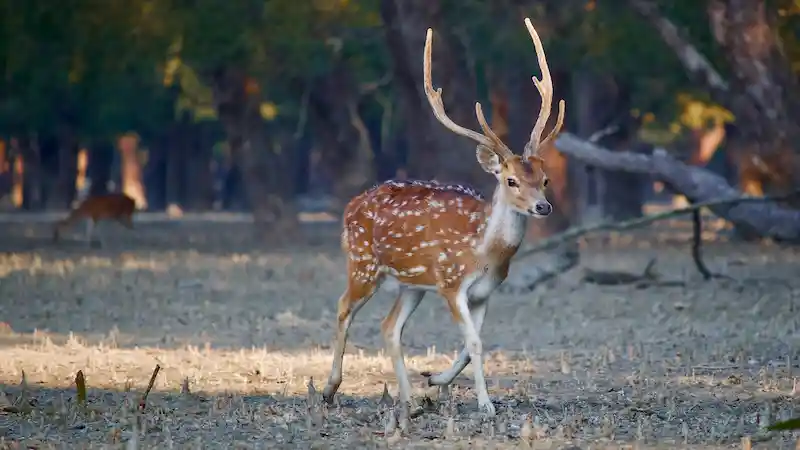
The Sundarbans is a UNESCO World Heritage site and one of the largest mangrove forests in the world, shared between Bangladesh and India across the Ganges-Brahmaputra delta. The Bangladesh section is a network of tidal rivers, channels, and forest islands that supports spotted deer, saltwater crocodiles, monitor lizards, wild boar, many bird species, and the Royal Bengal Tiger. Tigers are rarely seen by visitors, so plan the trip around the forest, the river scenery, and the birdlife rather than a guaranteed sighting.
Find a Hotel Near the Sundarbans (Khulna and Mongla)
Most visitors stay in Khulna the night before or after a boat trip, since safari vessels depart from Khulna or Mongla and often leave early. Compare locations, guest reviews, and cancellation terms, and check whether your tour operator includes a hotel night in the package before booking separately.
When to Visit the Sundarbans
November to February is the most comfortable period, with cooler, drier weather and calmer river conditions. December and January are the busiest months, so confirm your boat, guide, and permit arrangements well in advance.
March to May is hot and humid. From roughly June to October, the monsoon brings heavy rain, rough rivers, and a higher risk of cyclone-related disruption. Tourism access can be restricted or suspended at times for weather or conservation reasons, so verify current conditions with your operator and the Forest Department before travelling. See our Best Time to Visit Bangladesh guide for seasonal planning across the country.
How to Visit and Permit Requirements
The Sundarbans cannot be explored on foot or by road. All visits take place by boat, either on a multi-day vessel with cabins and meals or on a shorter day trip from Mongla.
Entry to the Sundarbans Reserved Forest requires permission from the Forest Department, and visitors are accompanied by authorised forest guards. Licensed tour operators normally arrange permits and guards as part of the package, which is the simplest option for international visitors. Entry fees, permit rules, and guard arrangements can change, so confirm them with your operator and the official Bangladesh Forest Department website before you pay.
Choose an operator that holds the correct licences, uses registered vessels, carries life jackets and a first-aid kit, and states clearly what the price covers (permits, guards, food, drinking water, and transfers).
Main Places to Visit in the Sundarbans
Karamjal
Karamjal is one of the most accessible tourist points, with a wildlife breeding centre, crocodile enclosures, deer, and a short forest walkway. It suits travellers on a shorter itinerary from Mongla.
Harbaria
Harbaria is known for its forest walkways and chances to see deer and monkeys. It is commonly included in short and mid-length boat itineraries.
Tin Kona Island
Tin Kona Island offers a watchtower and forest paths in an area where wildlife activity is possible, particularly around quieter hours.
Katka and Kochikhali
Katka has a forest watchtower and a stretch of coastline at the edge of the forest, while Kochikhali is known for its watchtower and mangrove scenery. Both are usually reached on longer itineraries, with boat time depending on tides and weather.
Dimer Char and Hiron Point
These areas are further south, closer to the Bay of Bengal, and are typically included in longer trips. Some stops have limited facilities, so itineraries depend on tides, weather, and permitted routes.
The exact stops on an itinerary are set by the operator and the guards based on tides, weather, and current rules. Treat any list of places as a guide to what is possible, not a guaranteed route.
How to Get to the Sundarbans
Reaching Khulna from Dhaka
Khulna is the main base for the Sundarbans. Train services connect Dhaka and Khulna, and intercity buses also run the route, with travel time depending on traffic and road conditions. Domestic flights serve Jashore Airport, from where Khulna is a road journey away. Schedules and availability change, so confirm details with the operator or official sources such as the Bangladesh Railway website. Our Transport in Bangladesh guide explains options in more detail.
If you are arriving from abroad, read our Dhaka Airport Arrival Guide before planning domestic connections.
Mongla and Khulna departure points
Multi-day safaris usually start from Khulna or Mongla, depending on the operator. Confirm the departure point, meeting time, and whether road transfers from Khulna to Mongla are included.
Safety in the Sundarbans
The forest is a wildlife habitat, and the rules exist for visitor safety.
- Stay with your guard and guide at all times, and do not enter the forest alone.
- Do not swim in the rivers or channels. Saltwater crocodiles are present, and currents can be strong.
- Follow instructions on landing points and watchtower paths. Keep quiet and do not feed or approach wildlife.
- Wear closed shoes and long sleeves for forest walkways, and use insect repellent.
- Check the weather forecast and do not push to continue a trip if the operator advises returning because of storms or rough water.
- Confirm that the vessel carries life jackets and has an emergency communication plan.
For general precautions and emergency contacts, read our Bangladesh Travel Safety Guide. For vaccinations, water, and insect protection, see Bangladesh Travel Health.
Mobile Signal and Practical Tips
- Connectivity: Mobile signal is limited or absent in many forest waterways, and coverage varies by operator and location. Ask your tour operator which network works best on your route, and review our SIM Cards and eSIMs Guide before departure. Download maps and tickets in advance.
- Cash: Carry Bangladeshi taka for small purchases, tips, and any extra costs. Cards are unlikely to work in remote areas. See our Money and Currency Guide.
- What to pack: Light long-sleeved clothing, a hat, sun protection, insect repellent, binoculars, a refillable water bottle, motion-sickness tablets if you are prone to it, and a waterproof bag for electronics.
- Food and water: Confirm what meals and drinking water are included, and tell the operator about allergies or dietary needs in advance.
- Respect for local communities: Honey collectors, fishers, and woodcutters work in and around the forest. Ask before taking photos of people and follow our Cultural Etiquette Guide.
Suggested Three-Day Plan
Day 1: Travel from Dhaka to Khulna, check in to your hotel, and confirm departure details with your operator. Keep the day flexible in case of transport delays.
Day 2: Board the vessel at Khulna or Mongla and travel into the forest, with stops at the stations your operator and guards schedule for the tides and weather. Look for deer, birds, monkeys, and crocodiles from the deck, and visit watchtowers where permitted.
Day 3: Make an early river cruise for the best wildlife viewing light, then return to port and continue to Khulna or onward travel.
Longer itineraries can reach more remote areas such as Katka, Kochikhali, and Dimer Char, but they require more days and depend on conditions.
Plan the Rest of Your Bangladesh Trip
The Sundarbans fits into a wider trip that starts in Dhaka and continues to other regions. These guides can help you connect the pieces:
- Dhaka Travel Guide
- Sylhet Travel Guide
- All Bangladesh destinations
- Plan your trip to Bangladesh
- Bangladesh Travel Safety Advice
- Best Time to Visit Bangladesh
Before departure, check current permit rules, weather, and boat schedules. Official notices and your operator’s on-the-ground instructions should take priority over older travel information.