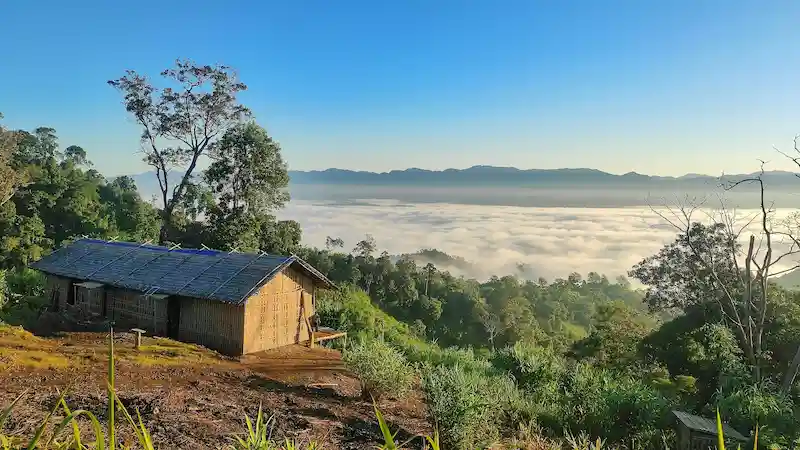
The Chattogram (also widely known internationally by its former English name Chittagong) Hill Tracts (CHT) cover the districts of Bandarban, Rangamati, and Khagrachhari in southeastern Bangladesh. The region has forested ridges, Kaptai Lake, waterfalls, trekking routes, and communities with their own languages and traditions, which makes it one of the most scenic parts of the country. It is also the part of Bangladesh that foreign governments warn against most strongly. Read the risks and permit requirements below before you add it to an itinerary, and treat the rest of this guide as planning information rather than encouragement to go.
Find a Hotel Near the Chattogram Hill Tracts
Most routes into the hills start in Chattogram, so many travellers base themselves there or in Cox’s Bazar and decide on a hill-district day trip only after checking current conditions. A hotel booking is not a travel permit and does not mean a district is open to foreign visitors. Compare locations, guest reviews, and cancellation terms, and choose flexible rates, because trips to this region are cancelled or rerouted more often than elsewhere.
Government Travel Advice: Read This First
At the time of writing (October 2026), the main official advice for the region is:
- United Kingdom: The FCDO advises against all but essential travel to the Chattogram Hill Tracts, covering Rangamati, Khagrachhari, and Bandarban. It warns that travel insurance can be invalidated if you travel against FCDO advice.
- United States: The State Department rates Bangladesh overall at Level 2 (exercise increased caution) but advises Level 4, do not travel, for the Chattogram Hill Tracts, citing unrest, crime, terrorism, and kidnapping. The US Embassy also notes that U.S. government employees need permission from the Government of Bangladesh to travel there.
Check your own government’s current advice before you plan, because it can change quickly. If you travel against official advice, your insurer may refuse a claim and your embassy’s ability to help may be very limited. Read the FCDO advice and the U.S. State Department advisory directly, and see our Bangladesh Travel Safety Guide for general precautions.
Risks to Consider Before Visiting
Security and political risk
The US advisory cites kidnappings, some linked to family disputes and others targeting religious minorities, as well as separatist groups, political violence, and past incidents involving explosive devices and shootings. Armed groups operate in parts of the hills, and rivalry between regional political groups has led to blockades and local tension. Remote border areas carry the highest risk.
Sudden closures and blockades
Access in this region can change with little notice.
- In October 2024, authorities asked tourists to avoid all three hill districts for more than three weeks after unrest.
- Parts of Bandarban, including Ruma and Thanchi, were closed to tourists for more than a year because of security operations before the restrictions were lifted in 2024.
- In October 2026, Rangamati’s administration suspended tourism at Sajek Valley on 11 October amid a blockade linked to rivalry between regional groups, and reopened it on 16 October. Around 1,500 tourists had been stranded by the roadblock.
Roads, rivers, and trekking routes can be blocked by strikes or by announced “blockades”, so build slack into your schedule and avoid fixed onward flights or trains on the same day you leave the hills.
Permits, checkpoints and restrictions
Foreign visitors need official permission to travel in the region (see the permit section below). Expect police, army, or Border Guard Bangladesh (BGB) checkpoints. Carry your passport, visa, and permit documents at all times, follow instructions from security personnel, and do not photograph military installations or checkpoints.
Floods, landslides and difficult terrain
Flash floods and landslides affect the hill districts during heavy rain, especially from June to October. Roads can be cut, boats can be suspended, and trekking trails become dangerous. Many treks, such as those around Boga Lake, Keokradong, and Nafakhum, pass through remote forest with little mobile coverage and no quick road access for evacuation.
Health and emergency access
Healthcare facilities in the hills are limited, and serious cases are usually moved to Chattogram or Dhaka. Malaria transmission occurs in parts of the hill districts, so ask a travel-health clinic about prevention before you go. See our Bangladesh Travel Health guide. Mobile signal is patchy or absent in many areas. Tell your hotel or operator your route, and consider travelling only with a licensed guide who can call for help.
Insurance and consular support
Check whether your policy covers the Chattogram Hill Tracts, adventure activities such as trekking, and emergency evacuation. If your government advises against travel, standard policies may not pay out.
Permits and Entry Rules for Foreign Visitors
Foreign nationals have needed government approval to visit the Chattogram Hill Tracts for many years, and the process has changed over time. An earlier government order required foreigners to apply to the Home Ministry about a month before travel, with approval depending on security clearance. Today, the district administration of Rangamati runs an official online permission system for foreign tourists. Its application asks for passport and visa copies, an itinerary, accommodation details, and the name of the licensed tour operator. Bandarban and Khagrachhari have their own district procedures.
Because rules, offices, and processing times change, do not rely on a hotel, driver, or social-media post to confirm that you are allowed in. Instead:
- Apply well before your trip, since permits are not issued on the spot and can be refused.
- Use a licensed tour operator that can show you written confirmation of permission for each district on your itinerary.
- Keep digital and printed copies of the permit, passport, and visa with you.
- Do not enter the hills as an informal guest of local residents without permission, which can create problems for both you and your hosts.
- Confirm that your permit covers specific sites and trekking routes, since some areas have separate restrictions.
Researchers, journalists, and aid workers usually need approval from the relevant ministries, not just the district office. Past orders have also required foreigners to speak with community members only in the presence of officials, so ask your operator whether any such condition applies on your dates.
When to Visit the Chattogram Hill Tracts
If you decide to go and conditions allow it, November to February is generally the most comfortable and driest period, with cooler mornings and clearer views. March to May is hot and humid. From roughly June to October, heavy rain increases the risk of landslides, floods, swollen rivers, and cancelled boat and road services. Even in the dry season, closures and blockades can occur, so confirm conditions with your operator immediately before departure. See our Best Time to Visit Bangladesh guide for seasonal planning across the country.
Main Places in the Chattogram Hill Tracts
Listing a place here is not a statement that it is currently open to foreign visitors. Access depends on current security and permit conditions.
Rangamati and Kaptai Lake
Rangamati is built around Kaptai Lake, a large reservoir created by a dam on the Karnaphuli River. Boat trips are the usual way to see the lake, the Hanging Bridge, and nearby Buddhist temples. It is generally considered one of the more accessible hill towns, and it is where the district administration operates its foreign tourist permission system.
Sajek Valley
Sajek, in Baghaichhari upazila of Rangamati District, is known for hilltop viewpoints, clouds at sunrise, and cottage-style stays. It is reached by road from Khagrachhari, often in open-top jeeps locally called Chander Gari. It has recently been affected by blockades and short-notice closures, so check its status the day before you travel.
Bandarban
Bandarban is the base for the hills’ most remote and demanding trips, including the Nilgiri and Nilachal viewpoints, the Buddha Dhatu Jadi (Golden Temple), and trekking routes to Boga Lake, Keokradong, and Nafakhum. Travel to parts of the district has been restricted repeatedly for security operations, and its remote areas are the highest-risk part of the region for foreign visitors.
Khagrachhari
Khagrachhari offers viewpoints, waterfalls such as Richhang, the Alutila cave, and routes towards Sajek. It is the least visited of the three districts by foreign tourists, and the same permit and security checks apply.
How to Get to the Chattogram Hill Tracts
The three hill districts are reached by road from Chattogram, which is the usual gateway. Journeys of roughly 75 to 100 km or more can take several hours, depending on traffic, road works, and weather, and routes into the hills have checkpoints. Intercity buses also connect Dhaka with Bandarban, Rangamati, and Khagrachhari, but foreign visitors should arrange transport and permission through a licensed operator rather than turning up at a bus station.
To reach Chattogram from Dhaka, you can fly, take an intercity train, or travel by road. Confirm schedules through airlines and the official Bangladesh Railway website, as services change. Our Transport in Bangladesh guide explains the options, and our Dhaka Airport Arrival Guide covers connections for international arrivals.
Safety Practices if You Do Go
- Travel only with a licensed operator and a local guide, and share your itinerary with someone at home.
- Check current news, your embassy’s advice, and your operator’s information the day before departure, not only when you book.
- Avoid travel near the Myanmar and India borders, and avoid travelling at night.
- Do not trek independently. Use registered guides, and carry water, a first-aid kit, and a charged phone or power bank.
- Stay away from political rallies, strikes, and blockades, and follow instructions from police and the army.
- Do not discuss land disputes, politics, or the region’s conflict history with strangers, and do not take photographs of people without their consent.
- Cancel or change plans if heavy rain, a landslide warning, or a closure notice is issued. Use the Bangladesh Flood Forecasting and Warning Centre and local forecasts to check river conditions.
Respecting Local Communities
The hills are home to many ethnic communities, including the Chakma, Marma, Tripura, Bawm, and others, with their own languages, religions, and customs. Visit as a guest, not as a spectator. Ask permission before photographing people, homes, and religious sites, dress modestly, remove shoes where required, and buy from local businesses. Read our Cultural Etiquette Guide before you go.
Safer Alternatives for Hills, Lakes and Nature
If your government advises against travel to the hills, or you do not want the added risk and paperwork, you can see similar scenery elsewhere in Bangladesh:
- Tea hills and forests: Sylhet, Srimangal and Chattogram hill tarcts offer tea estates, rivers, and swamp forest.
- Coastline: The Cox’s Bazar Travel Guide covers beaches, Himchari, and Marine Drive.
- Mangrove wilderness: The Sundarbans Travel Guide covers boat safaris and wildlife.
Common Questions
Is it safe to visit the Chattogram Hill Tracts?
The risk is higher than in most of Bangladesh. The UK advises against all but essential travel and the US advises against all travel to the region, citing unrest, crime, terrorism, and kidnapping. Some visits take place without problems, but conditions can change quickly, and remote areas carry the most risk.
Do foreigners need a permit for Bandarban, Rangamati and Khagrachhari?
Yes, foreign nationals need official permission to visit. The procedure and the authority involved have changed over time, so confirm current requirements with a licensed tour operator and the relevant district administration, and keep written proof of approval with you.
Is Bandarban safe for tourists?
Bandarban is part of the area covered by the UK and US advice. Parts of the district have been closed to tourists for security operations in recent years, and trekking areas are remote, with limited signal and medical access. Check current conditions before you plan.
What is the best time to visit?
November to February is usually the driest and most comfortable period. The monsoon, from roughly June to October, increases the risk of floods and landslides.
Plan the Rest of Your Bangladesh Trip
These guides can help you plan a trip that avoids or adds to the hills:
- Dhaka Travel Guide
- Sylhet Travel Guide
- Srimangal Travel Guide
- Sundarbans Travel Guide
- All Bangladesh destinations
- Plan your trip to Bangladesh
- Bangladesh Travel Safety Advice
Before departure, check your government’s current travel advice, permit requirements, weather, and local closure notices. Official notices and on-the-ground instructions should take priority over older travel information.