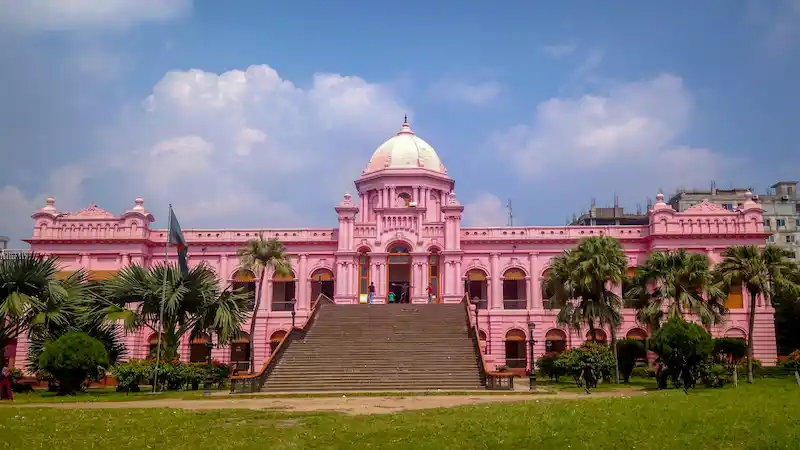
Dhaka can feel intense on arrival: traffic moves slowly, streets are busy, and the city changes character from one neighbourhood to the next. Give yourself time to explore rather than trying to cross the entire capital in a single day. Its rewards include Mughal-era landmarks, the riverfront and markets of Old Dhaka, excellent local food, and a glimpse of everyday life in one of South Asia’s most energetic cities.
If you are arriving from abroad, read the Dhaka Airport Arrival Guide before you land. It covers arrival procedures and practical first steps.
Find a Hotel in Dhaka
Choose accommodation around the places you expect to visit, not just by the room price. Gulshan, Banani, and Baridhara have many hotels and restaurants used by business travellers and international visitors; central areas may be more convenient for some historic sights but can be noisy and congested. Check recent reviews, the exact location, airport-transfer options, cancellation terms, and the full price before booking.
Top Places to Visit in Dhaka
Lalbagh Fort
Lalbagh Fort is a Mughal-era complex in Old Dhaka, associated with Prince Muhammad Azam and the Mughal governor Shaista Khan. The grounds include the tomb of Pari Bibi, a mosque, and garden spaces. It is one of the city’s best-known historic sites and a useful starting point for exploring the older part of Dhaka.
Opening days, hours, and ticket prices can change, particularly around public holidays or official events. Check current information before travelling across the city, and allow extra time for traffic. Dress respectfully and follow instructions about photography and restricted areas.
Ahsan Manzil (The Pink Palace)
Ahsan Manzil stands beside the Buriganga River in Old Dhaka. Once the residence of the Nawab of Dhaka, the distinctive pink building now operates as a museum, with exhibits connected to the city’s history and elite life in the nineteenth and early twentieth centuries.
It can be combined with a walk through nearby streets and markets, but the area is busy. Keep valuables secure, watch for traffic, and ask before photographing people at close range.
Old Dhaka and Its Markets
Old Dhaka is best explored at a slower pace. Its narrow streets, historic buildings, small shops, and food stalls offer a different experience from the wider roads and modern commercial districts elsewhere in the city. Congestion is common, so walking short sections with a local guide or using short local rides can be more practical than trying to cover several distant sights in one trip.
Food is a major part of the experience. Choose busy places where food is freshly prepared and served hot, and review our Bangladesh Travel Health Guide for food and water precautions.
Sadarghat and the Buriganga Riverfront
Sadarghat is one of Dhaka’s busiest river terminals, with boats and launches serving routes along the river network. It offers a vivid view of river transport and city life, but it is a working transport hub rather than a quiet promenade. Watch your footing around wet surfaces and vessel edges, keep bags secure, and follow staff instructions. Do not board a boat without confirming its destination and departure arrangements.
National Museum and Other Cultural Stops
Dhaka has museums, galleries, mosques, and cultural institutions worth adding if you have more than one day. Confirm opening hours and visitor rules with each institution before setting out; hours can change for holidays, maintenance, or official events. At religious sites, follow local dress and footwear guidance. Our Cultural Etiquette Guide explains what to expect.
Getting Around Dhaka
Dhaka’s traffic can make short distances take much longer than expected. Group nearby attractions together and avoid scheduling tight connections across the city.
- Metro rail: Dhaka Metro Rail’s MRT Line 6 serves parts of the city, including Uttara, Farmgate, and Motijheel. Check the current operating hours, station access, and ticketing instructions through official sources before travelling.
- App-based rides: Ride-hailing services can be useful for longer trips. Confirm the car or motorcycle details against the app before boarding and expect journey times to vary with traffic.
- Cycle rickshaws: Useful for short journeys on suitable local roads, but not appropriate for every route. Agree on the fare before setting off when it is not fixed.
- CNG auto-rickshaws and taxis: Availability and fare arrangements vary. Confirm the fare or booking details before starting the journey.
- Walking: Walking can be practical within a compact area, but pavements may be uneven or blocked and road crossings can be challenging. Choose routes carefully.
For intercity buses and trains, read our Transport in Bangladesh Guide. If you are continuing to the coast, our Cox’s Bazar Travel Guide explains how to plan that leg.
When to Visit Dhaka
November to February is usually more comfortable for sightseeing, with less rain and lower humidity than the monsoon period. December and January can bring cooler evenings, while air quality and haze may still affect outdoor comfort. The hot season can feel exhausting during long walks, and monsoon rain can disrupt journeys.
The best timing depends on your plans, not just temperature. Check the forecast before booking outdoor activities and allow flexibility for traffic or weather-related delays. See our Best Time to Visit Bangladesh guide for a month-by-month overview.
Food and Everyday Practicalities
Dhaka offers everything from simple rice-and-curry meals to restaurants serving international food. For a first visit:
- Choose busy food stalls and restaurants where dishes are cooked thoroughly and served hot.
- Ask about ingredients if you have allergies or dietary restrictions.
- Carry small amounts of Bangladeshi taka for small shops, rickshaws, and other purchases; card acceptance varies.
- Use a reputable exchange service or bank and check the amount before leaving the counter. See our Money and Currency Guide.
- Dress with the setting in mind, particularly when visiting mosques or other religious sites.
- Ask before photographing people, and avoid taking pictures of restricted security facilities.
Safety and Arrival Tips
Keep your phone and valuables secure in crowded markets, terminals, and busy streets. At night, use a reputable ride service or transport arranged by your accommodation rather than walking through unfamiliar, poorly lit areas. Avoid demonstrations and follow current official advice if public events or disruptions are reported.
Save your accommodation address offline so you can show it to a driver, and leave a generous buffer when travelling to the airport. For emergency contacts and wider precautions, see our Bangladesh Travel Safety Guide.
Suggested One-Day Itinerary
Morning: Visit Lalbagh Fort early, then explore nearby streets in Old Dhaka.
Midday: Have lunch at a busy local restaurant and visit Ahsan Manzil if it fits the current opening schedule.
Afternoon: If time and conditions allow, see the Buriganga riverfront or choose a museum or cultural stop. Avoid packing too many distant locations into the same afternoon.
Evening: Return to your accommodation before traffic becomes a problem, or have dinner near your hotel.
This is a flexible outline rather than a fixed route; opening hours, traffic, weather, and local conditions should determine the final order.
Continue Planning Your Bangladesh Trip
- Dhaka Airport Arrival Guide
- Bangladesh Visa Guide
- Money and Currency Guide
- Bangladesh Travel Safety Guide
- Cox’s Bazar Travel Guide
- All destinations in Bangladesh
- Plan your trip
Check official transport and attraction information shortly before visiting. Dhaka’s conditions can change quickly, and current local instructions should take priority over older travel information.